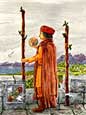
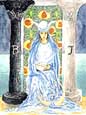
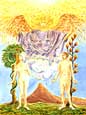
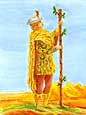
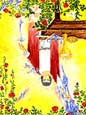
| The Celtic Cross spread is one of the most popular Tarot spreads, providing varied insight into many aspects of a complex situation and your role in it. The Aquatic Tarot is a modern watercolor interpretation of the classic Rider Waite symbolism. It is rapidly becoming one of the most popular decks, due to both its spectacular beauty and its traditional imagery. |
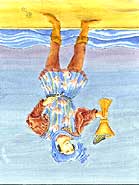 | The card not shown but at the center of the cross, represents the atmosphere surrounding the central issue. Page of Cups, when reversed: The dark essence of water behaving as earth, such as a wellspring: An unexpected new relationship that is childish and foolish. An idle dreamer oblivious to the realities of the world. Moodiness, sad reflection, and retreat from society. Seduction and deception in personal and business relationships. |
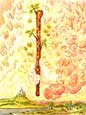
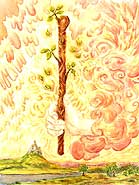 | The card visible at the center of the cross represents the obstacle that stands in your way - it may even be something that sounds good but is not actually to your benefit. Ace of Wands: The seed of a new venture - perhaps as yet unseen. An opportunity to be met with boldness, vigor, and enthusiasm. The herald of birth, invention, or entrepreneurship. An innate and primal force released. May suggest a surge of vitality, creativity, or fertility that can set things in motion. |
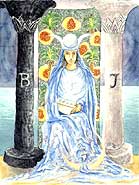 | The card at the top of the cross represents your goal, or the best you can achieve without a dramatic change of priorities. The High Priestess: A pure, exalted and gracious influence. Education, knowledge, wisdom, and esoteric teachings. The forces of nature. Intuition, foresight, and spiritual revelation of the most mysterious and arcane sort. |
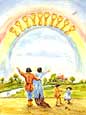
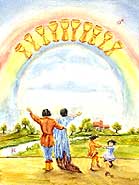 | The card at the bottom of the cross represents the foundation on which the situation is based. Ten of Cups (Satiety): Fulfillment and joy in life and love. Feeling peace, tranquility, and contentment in friends and family. Taking delight in one's good fortune. |
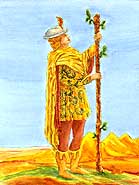 | The card at the left of the cross represents a passing influence or something to be released. Page of Wands: The essence of fire behaving as earth, such as wood or coal: The surprising appearance of a new passion. An adventurer who blazes through life, acting as a catalyst that others may harness. The intense enthusiasm and childlike imagination that fuels any new venture, needing only the application of mind and material to make it a success. Inner fire that can drive away fear and replace it with fury. Can represent a person of some timidity, but whose innate passion can be easily ignited. May indicate the birth of a child. |
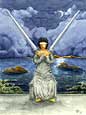
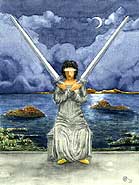 | The card at the right of the cross represents an approaching influence or something to be embraced. Two of Swords (Peace): Contradictory characteristics brought together as a means of resolving a conflict. Refusing to be ruled by negative emotions. Strife brought to a close through clarity of mind and restraint of force. Turning a blind eye to the minor infractions of others. |
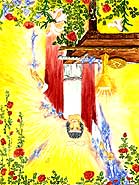 | The card at the base of the staff represents your role or attitude. The Magician, when reversed: Trickery, demagoguery, and artful deceptions. The use of knowledge and skill for selfish gain or destructive purposes. The abuse of technology. Incompetence and uncertainty. A lack of will power. A fatal flaw in a great work. |
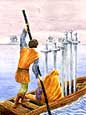
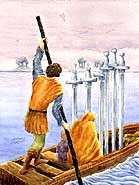 | The card second from the bottom of the staff represents your environment and the people you are interacting with. Six of Swords (Science): Trusting in intelligence and intuition and setting off into the unknown. Leaving an untenable situation and charting a new course. Passage from difficulty and progress towards a solution. The road to recovery. Travel and exploration. |
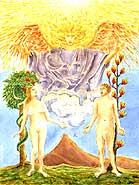 | The card second from the top of the staff represents your hopes, fears, or an unexpected element that will come into play. The Lovers: A caring and trusting relationship. Beauty and inner harmony. A decision calling for emotional control and faithfulness to spiritual values. |
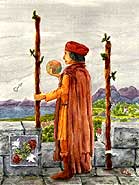 | The card at the top of the staff represents the ultimate outcome should you continue on this course. Two of Wands (Dominion): Established power and influence over others. Setting goals and a vision for the future. Coming to grips with the impact of past decisions, considering the current state of affairs, and developing a plan of action. Responsible leadership. |