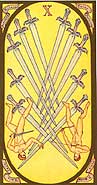
| The Hagall spread is a tool for revealing the path of spiritual growth in difficult situations. It is a favorite of mystics and those confronting a major life challenge. The Colman Smith Tarot is a modern reinvention of the classic Rider Waite deck, infusing the original line drawings by Pamela Colman Smith with colors drawn from the psychedelic digital age. |
 | The card in the middle of the circle represents the core or central issue of the situation. The Tower, when reversed: Unexpected upheaval leading to a positive change in life. Catastrophe survived or narrowly avoided. A new lifestyle and enlightenment. May indicate a broken relationship, divorce, or failure in business or career. |
 | The card at the bottom of the circle represents something you did to bring the situation about. The Star: New hopes and splendid revelations of the future. Insight, inspiration, courage and enlightenment of the spiritual self. Body and mind and converging towards the light at the end of a dark time. |
 | The card at the bottom left of the circle represents your beliefs, impressions, or expectations. The World, when reversed: Incompleteness and shoddy design. A great work betrayed. Insecurity, fear of change, and the failure to reach goals. Regret and disappointment. |
 | The card at the bottom right of the circle represents the most likely outcome of the situation given present circumstances. The Magician: Mastery over word, mind, and matter. The ability to turn ideas into actions, handle problems, and control one's life. The initiation of new projects, great works, or a new way of life. Eloquent and moving communication. Arcane and eldritch technologies. |
 | The card at the upper left of the circle represents the spiritual history of the situation the things you've learned. The Moon, when reversed: Clarity, control and peace in troublesome times. Increased psychic abilities. Temptations, small problems and minor setbacks overcome. The dawning of a new day. |
 | The card at the top of the circle represents the spiritual tasks and challenges of the present situation. Two of Cups (Love), when reversed: Instability in romance, friendship, or business. A deep infatuation that excludes existing friends. A false promise or premature commitment. The entanglement of male and female interpreted in the broadest sense. The profaning of the sacred through the introduction of base desire. Folly, depletion, and waste. May suggest conflict, divorce, or a severing of ties. |
 | The card at the upper right of the circle represents the metamorphosis of the spiritual situation, and how your knowledge will evolve. Knight of Cups, when reversed: The dark essence of water behaving as fire, such as a flash flood: Deceptive charm in the service of intense insecurity and rapidly shifting moods. Selfishness, indolence, and a complete lack of maturity. Misguided idealism divorced from practicality. Destructive romantic passions and infidelity. |
 | The card at the left of the lower line represents the person or qualities that will sustain your spiritual journey. Three of Swords (Sorrow), when reversed: Unsettling news that helps you to distance yourself from a destructive relationship. Painfully honest communication that needs to take place. Not letting yourself be dragged by your emotions into a negative situation. A trust or confidence betrayed in an attempt to help someone in need. The revelation of a painful truth. |
 | The card in the middle of the lower line represents the qualities that you express in this circumstance. The Hermit: Withdrawal from events and relationship to introspect and gather strength. Seeking the inner voice or calling upon vision from within. A need of understanding and advice, or a wise man who will offer knowing guidance. Personal experience and thoughtful temperance. |
 | The card at the right of the lower line represents the person or qualities that will reveal spiritual knowledge. Two of Wands (Dominion): Established power and influence over others. Setting goals and a vision for the future. Coming to grips with the impact of past decisions, considering the current state of affairs, and developing a plan of action. Responsible leadership. |