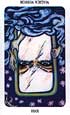
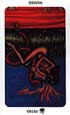
| The Hagall spread is a tool for revealing the path of spiritual growth in difficult situations. It is a favorite of mystics and those confronting a major life challenge. The Voodoo Tarot of New Orleans is a deck rich in primal spirituality. It draws on images from the religion Santeria, which weaves Catholic and African beliefs into a vibrant tapestry. This exceptional deck is most often used to ask questions regarding the joy, fury, and spirituality in everyday life. If you would like your own copy of the Voodoo Tarot of New Orleans, you can buy it now! |
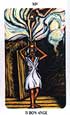
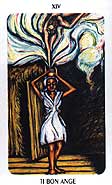 | The card in the middle of the circle represents the core or central issue of the situation. Ti Bon Ange (Temperance): Calm and restraint. Self-control, patience and tact in handling situations. The act of applying balanced spiritual and psychic forces to physical life. |
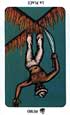
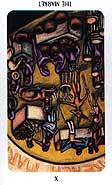 | The card at the bottom of the circle represents something you did to bring the situation about. The Market (The Wheel), when reversed: An unexpected turn of bad luck. A broken sequence of events. Outside influences for the worse. An inescapable descent due to Fate or Karma. Great changes taking place as a result of earlier actions that cannot be taken back. Misfortune, failure and reluctance to use free will. |
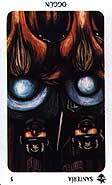 | The card at the bottom left of the circle represents your beliefs, impressions, or expectations. Oggun (Five of Discs), when reversed: Concern over finance leads to prudent action. Impending physical threat is met with calm and skill. Suffering and loneliness leads to spiritual growth. Stress is met without resorting to excess or the pursuit of oblivion. |
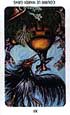
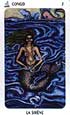
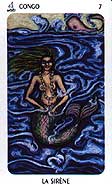 | The card at the bottom right of the circle represents the most likely outcome of the situation given present circumstances. La Sirene (Seven of Cups): Daydreams and things seen in the glass of contemplation. The scattering of energies by strong desires and unrealistic goals. The pursuit of illusions and the dissipation of energy on false choices. Intoxication, delirium, and hallucination, leading to the negation of effort. Under rare and extreme circumstances, may indicate the revelation of transcendental spiritual truth. |
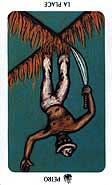 | The card at the upper left of the circle represents the spiritual history of the situation the things you've learned. Petro La Place (Knight of Wands), when reversed: The dark essence of fire, such as a great conflagration: One filled with vitality and limitless appetite. A sexy and exciting person, obsessed with style and outward appearance, overconfident in their abilities, and foolhardy in their actions. A hot temper and domineering nature, coupled with a love of false drama and all things theatrical. Anxiety over remaining in one place or with one person for too long. The rapid approach, or more likely departure, of someone or something that ruptures your world. Often suggests travel as the result of discord, or cruel indifference. |
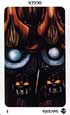
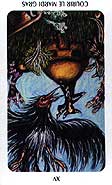 | The card at the top of the circle represents the spiritual tasks and challenges of the present situation. Courir Le Mardi Gras (The Devil), when reversed: Resistance of temptation. Freedom from bondage. The pursuit of higher goals despite the influence of luxury and pleasure. Release from obsession with money and power. Liberation from fear, weakness and indecision through communion with higher powers or the inner voice. |
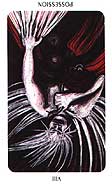 | The card at the upper right of the circle represents the metamorphosis of the spiritual situation, and how your knowledge will evolve. Possession (Strength), when reversed: Weakness in the face of obstacles and adversity. Tremendous power released at the wrong moment. Inability to defend oneself. Confusion, and lack of preparedness. Illness, hardship, distress and the failing of physical force. Dominant behavior, abusiveness and a possible loss of reputation. |
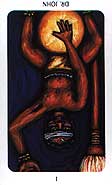 | The card at the left of the lower line represents the person or qualities that will sustain your spiritual journey. Dr. John (The Magus), when reversed: Trickery, demagoguery, and artful deceptions. The use of knowledge and skill for selfish gain or destructive purposes. The abuse of technology. Incompetence and uncertainty. A lack of will power. A fatal flaw in a great work. |
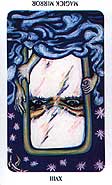 | The card in the middle of the lower line represents the qualities that you express in this circumstance. Magick Mirror (The Moon), when reversed: Clarity, control and peace in troublesome times. Increased psychic abilities. Temptations, small problems and minor setbacks overcome. The dawning of a new day. |
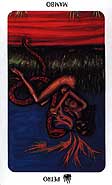 | The card at the right of the lower line represents the person or qualities that will reveal spiritual knowledge. Petro Mambo (Queen of Wands), when reversed: The dark essence of fire behaving as water, such as steam: The natural embodiment of passion and sensuality, who will do anything to the be the center of attention. A seducer who calculatingly dons the guise of what others desire. A cocky and domineering person, who pushes anyone or anything aside to get what she wants. One who is vengeful and quick to take offense without good cause. May indicate infidelity and contempt for a relationship. |