| The Relationship spread provides insight into the interaction between two people or entities. It is the spread of choice for questions about partnerships, be they in romance or business. The William Blake Tarot explores the mystical vision and artistry of the renowned English painter and poet. Through rich interpretations focused on creative undertakings, it has long been the deck of choice for artists, writers, musicians, and thinkers. For more information about this deck, or to buy your own personal copy, go to www.blaketarot.com.
|
 | The card at the top left represents how you see yourself. Nine of Painting (Fruition): Rewards of relaxation, luxury, or perks for a job well done. A profound or peak experience. Physical bliss, orgasmic potentials. Tangible achievement on many levels. Peak health or accelerated healing. Active participation in a complex physical or job process. Making tangible contributions to society. In the creative process: You gain by combining separate elements into an integrated whole; making the right use of what is available in order to achieve your goals. |
 | The card at the top right represents how you see your partner. Five of Science (Division): Feeling overwhelmed and unable to focus on the whole problem. Being unable to cut yourself loose. Being mentally hung up. Personal entanglements. Intellectually split. Divided loyalties. Inaction through indecision. In the creative process: Caught in your own net of plans or scheme. Divide the problem into smaller segments for greater freedom of action. |
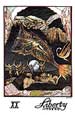
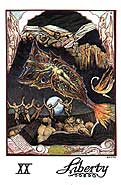 | The card in the center left represents how you feel about your partner. Liberty: An emerging and powerful sense of personal freedom. Hearing a call to action. Awakening to a deeper level of awareness or sense of spiritual self. A rebirth or basic change of state. Making an important decision or judgment, perhaps one long delayed. Being released from limiting circumstances. |
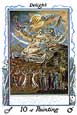
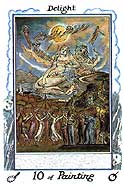 | The card in the center right represents what stands between you and your partner. Ten of Painting (Delight): Your work or ideal takes on a life of it own. Financial prosperity. Achievement or promotion on the job. Inheriting something of tangible or permanent value. Family gatherings and traditions. Finding your roots. Active involvement in community and societal spheres. In the creative process: The success of completion of your project is cause for celebration and an opportunity to honor all the gods and spirits that participated in your benefit. |
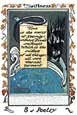
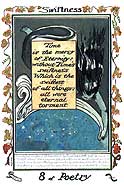 | The card in the lower left represents how your partner sees you. Eight of Poetry (Swiftness): "Time is the mercy of Eternity: / without Time's swiftness Which is the swiftest of all things: / all were eternal torment". Vigorous and imaginative assertion is strongly indicated. Experiencing the relativity of time. The speeding-up of events or gathering of energy. Falling in love, or being swept off your feet. Everything is up in the air or in process. Flux. Rapid communications across time and space. The Internet. Look for coincidences and serendipity at work. In the creative process: Transcend all illusions of time and space by using your imagination, which can take you anywhere at any time. |
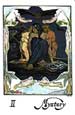
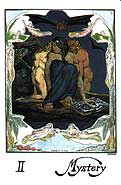 | The card in the lower right represents what your partner feels about you. Mystery: Relying on your intuitive abilities and listening to inner wisdom. Unexplained or mysterious energies at work. Issues of sexuality. Feeling a sense of divine protection. Guarding your territory. Look around you for instructive omens and portents. Attraction to or advice from a wise woman. |
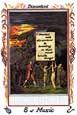
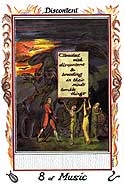 | The card in the center represents the present status or challenge of the relationship. Eight of Music (Discontent): "Clouded with discontent & brooding in their minds terrible things". Disappointment or dissatisfaction. Troubled emotions below the surface. Feeling at the mercy of circumstances. Possibility of emotional breakdown. Fears of what may happen. Apprehensions about the unknown. Paranoia. Feelings of missing out on something. Former values and friends no longer interest you. Wanting to escape the situation. In the creative process: Psychodrama and emotional torments can serve as imaginative stimulants. Expressing and documenting what you feel can be artful as well as healing. |