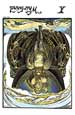
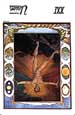
| The Celtic Cross spread is one of the most popular Tarot spreads, providing varied insight into many aspects of a complex situation and your role in it. The William Blake Tarot explores the mystical vision and artistry of the renowned English painter and poet. Through rich interpretations focused on creative undertakings, it has long been the deck of choice for artists, writers, musicians, and thinkers. For more information about this deck, or to buy your own personal copy, go to www.blaketarot.com.
|
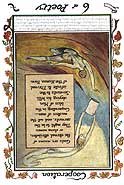 | The card not shown but at the center of the cross, represents the atmosphere surrounding the central issue. Six of Poetry (Cooperation), when reversed: Unwillingness to bring complimentary forces together. Archetypes that should fuel each other remain at odds. Too many cooks spoil the broth. Teamwork gone awry. Trouble dealing with those in high places. Being placed in the middle of two warring parties. In the creative process: This is a time to rely on your intuition to invoke the "eternal attributes" you need to get the job done; cooperate with your visions. |
 | The card visible at the center of the cross represents the obstacle that stands in your way - it may even be something that sounds good but is not actually to your benefit. Moon: Psychic insights. Relying on your instincts. Using your dreams and musings as sources of inspiration. Hidden conditions and unknown circumstances. Cyclic patterns and influences. |
 | The card at the top of the cross represents your goal, or the best you can achieve without a dramatic change of priorities. Religion, when reversed: Hypocritical influences and spiritual materialism. Corruption in high places. Fighting or giving in to City Hall. Feeling oppressed by the rules. Question authority and be suspicious of leaders and gurus. |
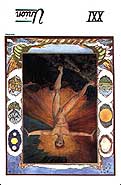 | The card at the bottom of the cross represents the foundation on which the situation is based. Union, when reversed: Something vitally important to you refuses to come together. Discord between male and female forces, or inner and outer life. Holding back. Incompleteness. Fear of intimacy or self-sacrifice. |
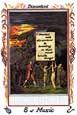
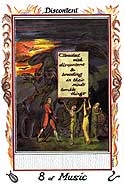 | The card at the left of the cross represents a passing influence or something to be released. Eight of Music (Discontent): "Clouded with discontent & brooding in their minds terrible things". Disappointment or dissatisfaction. Troubled emotions below the surface. Feeling at the mercy of circumstances. Possibility of emotional breakdown. Fears of what may happen. Apprehensions about the unknown. Paranoia. Feelings of missing out on something. Former values and friends no longer interest you. Wanting to escape the situation. In the creative process: Psychodrama and emotional torments can serve as imaginative stimulants. Expressing and documenting what you feel can be artful as well as healing. |
 | The card at the right of the cross represents an approaching influence or something to be embraced. Five of Music (Melancholy), when reversed: Denial. Failure to reach spiritual insights following a sad event. Inability to leave past failures behind. Buried hopes. Refusal to acknowledge mistakes. Letdown after intense effort. In the creative process: Convert the pain of disappointment or loss into artistic expression. Let go of something old or dead and move on to something new and alive. |
 | The card at the base of the staff represents your role or attitude. Magic, when reversed: Loss of control over the situation. Misdirection of powerful forces. Squandering the available resources. Ineffective communication. Taking action at the wrong time or in the wrong context. The use of naked aggressiveness when subtlety is required. Lack of tools and skills. |
 | The card second from the bottom of the staff represents your environment and the people you are interacting with. Assessment: A need to be fair and just. A situation involving judgments or balancing the issues. Consideration of commitments, agreements, or negotiations. Weighing the pros and cons of a situation. Evaluating the needs of self versus others. Transcending the limits of a situation by using kindness and imagination. |
 | The card second from the top of the staff represents your hopes, fears, or an unexpected element that will come into play. Man of Painting: Getting on top of practical aspects of the situation. Taking a pragmatic outlook at what needs to be done. Using calm and caution in a highly charged situation. Taking a conservative yet colorful and personal approach. Total concentration on the task at hand. Bathing in the light of life. Not holding back from direct experience. In the creative process: Test and refine your ideas or product to see if it works as planned; be practical yet innovative. |
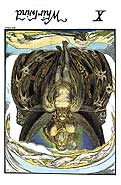 | The card at the top of the staff represents the ultimate outcome should you continue on this course. Whirlwind, when reversed: Winds of change make old visions obsolete. An act of god or stroke of bad luck. Inner turmoil cleverly disguised but unrestrained. Getting the run-around. Reaching a turning point. A good time to honor your gods. |