| The Hagall spread is a tool for revealing the path of spiritual growth in difficult situations. It is a favorite of mystics and those confronting a major life challenge. The Renaissance Tarot is a modern deck, with symbolism drawn from the heroic age and rendered in renaissance style. This deck is an excellent choice for exploring questions of passion, mastery, and the inner workings of human reason. If you would like your own copy of the Renaissance Tarot, you can buy it now! |
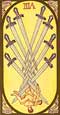
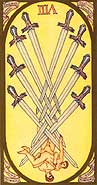 | The card in the middle of the circle represents the core or central issue of the situation. Eight of Swords (Interference), when reversed: The lingering presence of a betrayal. |
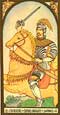
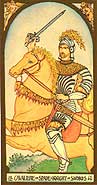 | The card at the bottom of the circle represents something you did to bring the situation about. Knight of Swords: An enthusiastic man of action. One who confronts the world at full speed, with head held high. Sunny but fierce and leonine person. An uncompromising judge of character, like Michael the archangel. |
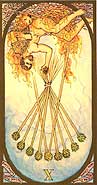 | The card at the bottom left of the circle represents your beliefs, impressions, or expectations. Ten of Staves (Oppression), when reversed: Avoidance of pain and absence of pleasure. Obscurity and domesticity. |
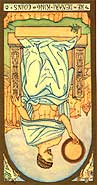 | The card at the bottom right of the circle represents the most likely outcome of the situation given present circumstances. King of Coins, when reversed: If intelligent, one susceptible to the influence of the child of Saturn, Accidia, the inertia and melancholy of the philosophers. If conventional, then an avarice and greedy person preoccupied with money, with an idolatrous faith in the exploitation of the earth and a distrust of nature. |
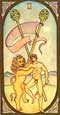
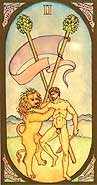 | The card at the upper left of the circle represents the spiritual history of the situation the things you've learned. Two of Staves (Dominion): A decisive, perhaps early, accomplishment. Confirmation of boldness and courage. |
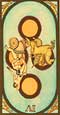
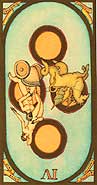 | The card at the top of the circle represents the spiritual tasks and challenges of the present situation. Four of Coins (Power), when reversed: Equanimity. Suspension of conflict. Balance of power. |
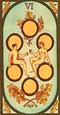
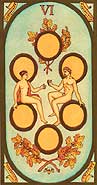 | The card at the upper right of the circle represents the metamorphosis of the spiritual situation, and how your knowledge will evolve. Six of Coins (Success): Generosity. Philanthropy. Charity. A wise and compassionate decision. |
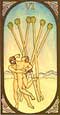
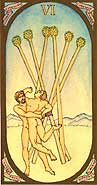 | The card at the left of the lower line represents the person or qualities that will sustain your spiritual journey. Six of Staves (Victory): Triumph over great difficulties. A glorious victory. "If at first you don't succeed, try, try again." |
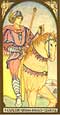
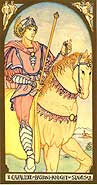 | The card in the middle of the lower line represents the qualities that you express in this circumstance. Knight of Staves: A traveler. A journey. The call of far away places. The arrival or return of a pilgrim or wanderer. A person of far-ranging interests and restless curiosity who is desirous of change and transformation. Inventive and artistic, but sometimes absent-minded person. Having one's "head in the clouds." |
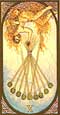
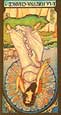
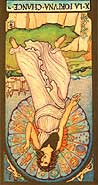 | The card at the right of the lower line represents the person or qualities that will reveal spiritual knowledge. Wheel of Fortune, when reversed: Inauspicious atmosphere. Strange omens. Dark auguries. |