| The Celtic Cross spread is one of the most popular Tarot spreads, providing varied insight into many aspects of a complex situation and your role in it. The Colman Smith Tarot is a modern reinvention of the classic Rider Waite deck, infusing the original line drawings by Pamela Colman Smith with colors drawn from the psychedelic digital age. |
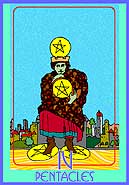 | The card not shown but at the center of the cross, represents the atmosphere surrounding the central issue. Four of Pentacles (Power): Cleaving to earthly power in the desperate fear that it will be lost. Making yourself an obstacle to progress due to lack of originality and a desperate fear of change. Believing that security and identity are based primarily on the possession of material things. Coveting things and people. Living in a cloud of suspicion and prejudice. |
 | The card visible at the center of the cross represents the obstacle that stands in your way - it may even be something that sounds good but is not actually to your benefit. Strength: Raw power. Health and physical fortitude. A surge of tremendous force. Recovery from sickness. Victory after apprehension and fear. The ability to face and overcome opposition brings the inner qualities of strength and forbearance. Delays and setbacks will be overcome. |
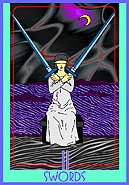 | The card at the top of the cross represents your goal, or the best you can achieve without a dramatic change of priorities. Two of Swords (Peace): Contradictory characteristics brought together as a means of resolving a conflict. Refusing to be ruled by negative emotions. Strife brought to a close through clarity of mind and restraint of force. Turning a blind eye to the minor infractions of others. |
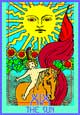
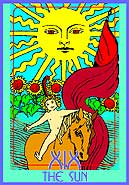 | The card at the bottom of the cross represents the foundation on which the situation is based. The Sun: A time of contentment and freedom from restraints. Creative inspiration. Achievement, success, and warmth. Light and love in personal or business matters. Happiness and faithfulness in a relationship. |
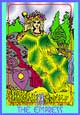
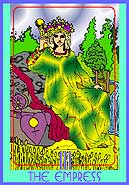 | The card at the left of the cross represents a passing influence or something to be released. The Empress: The essence of femininity and matriarchy. Creativity, productivity, and the foundation of civilization. Initiative and practical actions that promote prosperity, comfort and luxury. Fruitfulness and motherhood. |
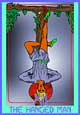
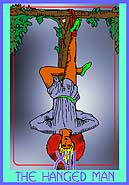 | The card at the right of the cross represents an approaching influence or something to be embraced. The Hanged Man: Pausing to reflect. Surrendering to an experience. Adjusting to new ideas through sacrifice. Opening oneself to intuition and enhanced awareness. Letting go of past patterns and growing beyond them. Inner peace, faith, and serenity. |
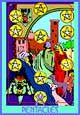
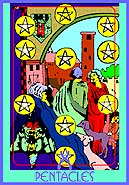 | The card at the base of the staff represents your role or attitude. Ten of Pentacles (Wealth): Completion of material prosperity and riches. Freedom from financial anxiety, the security of home, and the enjoyment of family. The passing of inheritance along to children, or the gaining of inheritance from parents. |
 | The card second from the bottom of the staff represents your environment and the people you are interacting with. The Magician: Mastery over word, mind, and matter. The ability to turn ideas into actions, handle problems, and control one's life. The initiation of new projects, great works, or a new way of life. Eloquent and moving communication. Arcane and eldritch technologies. |
 | The card second from the top of the staff represents your hopes, fears, or an unexpected element that will come into play. Seven of Cups (Temptation): Daydreams and things seen in the glass of contemplation. The scattering of energies by strong desires and unrealistic goals. The pursuit of illusions and the dissipation of energy on false choices. Intoxication, delirium, and hallucination, leading to the negation of effort. Under rare and extreme circumstances, may indicate the revelation of transcendental spiritual truth. |
 | The card at the top of the staff represents the ultimate outcome should you continue on this course. Seven of Pentacles (Assessment): A pause to check on the progress of your labors. Making difficult financial decisions. Exercising patience and perseverance. Evaluating the status of your work and your options for the future. |