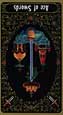
| The Creative Process spread is designed specifically to peer into the nature of a project or creative undertaking, and shine a spotlight on the evolution of its parts. The Russian Tarot of Saint Petersburg is the final commissioned work of Yuri Shakov, a master in the lost art of Russian miniature painting. The rich, dark images lend themselves to questions regarding the struggle of the human spirit in trying times. If you would like your own copy of the Russian Tarot of Saint Petersburg, you can buy it now! |
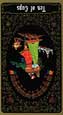
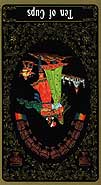 | The card in the middle represents the creative force behind the project, be it a person, organization, or other entity. Ten of Cups (Satiety), when reversed: Loss of friendship. Unhappiness. Family quarrel. Pettiness. Rage. Difference of opinion. |
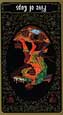
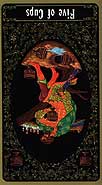 | The card on the top represents imagination - the prophetic image that stems from the creative force of the previous card to initiate the project. This is the poetry or voice of the undertaking. Five of Cups (Disappointment), when reversed: Hopeful outlook. Favorable expectations. New alliances. Affinity. Return of an old friend. Reunion. |
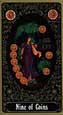
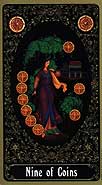 | The card on the left represents emotion - the feelings aroused by or surrounding the ideation of the project that takes place in the previous card. This is the music or scent of the undertaking. Nine of Coins (Gain): Accomplishment. Discernment. Discretion. Foresight. Prudence. Material well-being. Love of nature. |
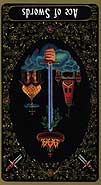 | The card on the bottom represents thought - the analytical process of organizing the project and capturing the emotional content of the previous card. This is the science or vision of the undertaking. Ace of Swords, when reversed: Debacle. Tyranny. Disaster. Self-destruction. Violent temper. Embarrassment. Obstacle. Infertility. |
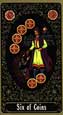
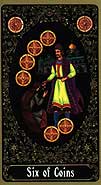 | The card on the right represents manifestation - the real work involved in completing the project, and the form it will take upon culmination. This is the painting or touch of the undertaking. Six of Coins (Success): Generosity. Philanthropy. Charity. Kindness. Gratification. Gifts. Material gain. |