| The Relationship spread provides insight into the interaction between two people or entities. It is the spread of choice for questions about partnerships, be they in romance or business. The Sola Busca Tarot is a color embellished reproduction of the only known extant 15th century Tarot deck engraved on metal. It is the choice of purists and those seeking a direct channel with the dawn of Western occultism. |
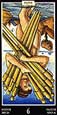
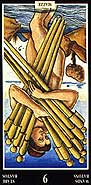 | The card at the top left represents how you see yourself. 9 Mazze (Strength), when reversed: Delayed preparations for an impending trial. Efforts compromised by traitors or saboteurs. The scattering of forces before the conclusive battle is fought. Ill health and faltering of the will. |
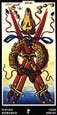
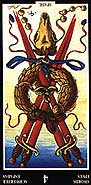 | The card at the top right represents how you see your partner. 4 Spade (Truce), when reversed: Restlessness and mental disharmony. Deserting a struggle in progress. A temporary retreat from stress that turns into a permanent rout. A lack of vigilance that could lead to disaster. |
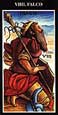
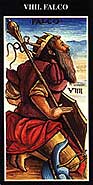 | The card in the center left represents how you feel about your partner. Falco (The Hermit): Withdrawal from events and relationship to introspect and gather strength. Seeking the inner voice or calling upon vision from within. A need of understanding and advice, or a wise man who will offer knowing guidance. Personal experience and thoughtful temperance. |
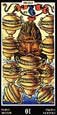
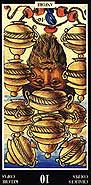 | The card in the center right represents what stands between you and your partner. 10 Anfore (Satiety), when reversed: Dissipation, debauchery, and stagnation. Taking one's good fortune for granted. Problems in domestic and social matters. A false love or infatuation, leading to a lack of fulfillment. |
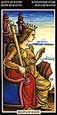
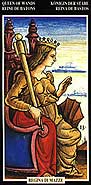 | The card in the lower left represents how your partner sees you. Regina di Mazze (Queen of Wands): The essence of fire behaving as water, such as a rainbow: The natural embodiment of passion and sensuality, who is always the center of attention. One who reflects the desires and ambitions of others, and ignites them. A radiantly vital person, cocky and charismatic, who sees what she wants and goes after it. |
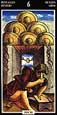
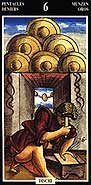 | The card in the lower right represents what your partner feels about you. 6 Dischi (Success): A time of prosperity and profit. Success and generosity in material things. Power and influence turned to noble pursuits. Philanthropy, and the balancing of physical and spiritual life. May suggest gifts or aid to one in need. |
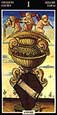
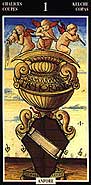 | The card in the center represents the present status or challenge of the relationship. 1 Anfore (Ace of Cups): The seed of a new relationship or spiritual journey - perhaps as yet unseen. An opportunity for joy, contentment, fertility, or enlightenment. Coming to understand the emotional needs of those around you. May represent an unexpected message, a chance meeting, or the start of a friendship or romance. |