| The Shadow Truth spread provides insight into your attitudes and hidden feelings. This spread is used when you are having trouble confronting something, or fear that you are concealing something from yourself. The Ator Tarot is a smart and whimsical spin on Rider Waite symbolism. The clunky and adorable characters of the Ator Tarot make it the deck of choice for those seeking a refreshing approach to divination. If you would like your own copy of the Ator Tarot, you can buy it now! |
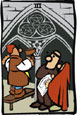
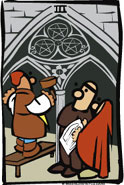 | The card in the center represents the attitude you assume. Three of Pentacles (Works): The commencement of business, commercial transactions, or employment. The constructive use of creative talents, and the expression of artistry in workmanship. Skill and labor turned to the crafting of things of value. Using the conventional as a medium for expressing the exceptional, in order to build something of great renown and glory. |
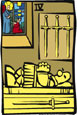
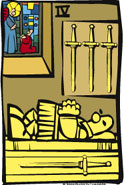 | The card to the right represents the thoughts and feelings that underly your attitudes. Four of Swords (Truce): A time of tranquility and intellectual repose in the midst of a great struggle. A temporary retreat from stress to regather inner strength, reaffirm convictions, reorganize thoughts, and formulate a new plan. The need for vigilance in a moment of calm. May suggest a withdrawal from the material world to find spiritual guidance. |
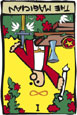
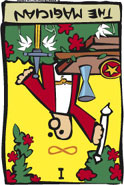 | The card at the top represents how your attitude is evolving and will evolve in the future. The Magician, when reversed: Trickery, demagoguery, and artful deceptions. The use of knowledge and skill for selfish gain or destructive purposes. The abuse of technology. Incompetence and uncertainty. A lack of will power. A fatal flaw in a great work. |
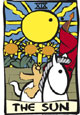
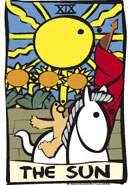 | The card to the left represents how others perceive your attitude. The Sun: A time of contentment and freedom from restraints. Creative inspiration. Achievement, success, and warmth. Light and love in personal or business matters. Happiness and faithfulness in a relationship. |
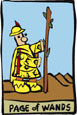
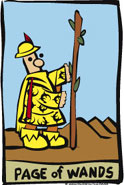 | The card at the bottom represents what you cannot confront or are hiding from yourself. Page of Wands: The essence of fire behaving as earth, such as wood or coal: The surprising appearance of a new passion. An adventurer who blazes through life, acting as a catalyst that others may harness. The intense enthusiasm and childlike imagination that fuels any new venture, needing only the application of mind and material to make it a success. Inner fire that can drive away fear and replace it with fury. Can represent a person of some timidity, but whose innate passion can be easily ignited. May indicate the birth of a child. |