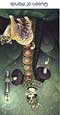
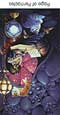
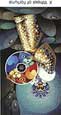
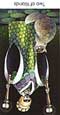
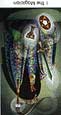
| The Shadow Truth spread provides insight into your attitudes and hidden feelings. This spread is used when you are having trouble confronting something, or fear that you are concealing something from yourself. The Cat People Tarot paints a picture of faraway lands trod by mystical archetypes and their feline companions. This deck is a perfect tool for dreamers and idealists, and is a great choice for divining the nature of human imagination. If you would like your own copy of the Cat People Tarot, you can buy it now! |
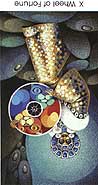 | The card in the center represents the attitude you assume. The Wheel of Fortune, when reversed: Failure. Ill luck. Broken sequence. Unexpected bad fate. Interruption or inconsistency due to unexpected events. Outside influences not contemplated. |
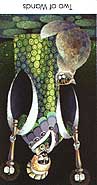 | The card to the right represents the thoughts and feelings that underly your attitudes. Two of Wands (Dominion), when reversed: Sadness. Trouble. Restraint caused by others. Loss of faith. Unexpected surprise. |
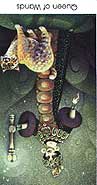 | The card at the top represents how your attitude is evolving and will evolve in the future. Queen of Wands, when reversed: Jealousy. deceit. Possible infidelity. Unstable emotions, Fickleness. Resistance. Obstacles. Opposition. |
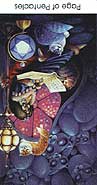 | The card to the left represents how others perceive your attitude. Page of Pentacles, when reversed: An unrealistic person. Failure to recognize obvious facts. Dissipation of ideas. Illogical thinking. Rebelliousness. Wastefulness. Loss. Unfavorable news. |
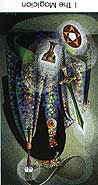 | The card at the bottom represents what you cannot confront or are hiding from yourself. The Magician, when reversed: Weakness of will. Ineptitude. Insecurity. Disquiet. Lack of imagination. Willpower applied to evil ends. |