Today's Tarot for V. I. Lenin
| The Creative Process spread is designed specifically to peer into the nature of a project or creative undertaking, and shine a spotlight on the evolution of its parts. The Voodoo Tarot of New Orleans is a deck rich in primal spirituality. It draws on images from the religion Santeria, which weaves Catholic and African beliefs into a vibrant tapestry. This exceptional deck is most often used to ask questions regarding the joy, fury, and spirituality in everyday life. If you would like your own copy of the Voodoo Tarot of New Orleans, you can buy it now! |
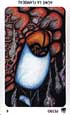
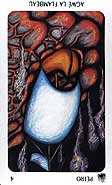 | The card in the middle represents the creative force behind the project, be it a person, organization, or other entity. Agwe La Flambeau (Four of Wands), when reversed: Squandering a great and hard won victory through decadence and laziness. Failing to reward those truly responsible for an achievement. Using past accomplishments as an excuse to ignore current problems. Abandoning the very qualities that brought about initial success. |
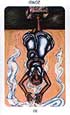
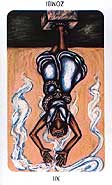 | The card on the top represents imagination - the prophetic image that stems from the creative force of the previous card to initiate the project. This is the poetry or voice of the undertaking. Zombi (The Hanged Man), when reversed: Life in suspension. Selfish, materialistic, and untrusting attitudes. Unwillingness to make necessary sacrifices. Going along with the crowd, and refusing to hear the inner voice. Concessions and appeasements that backfire. |
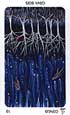
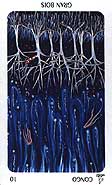 | The card on the left represents emotion - the feelings aroused by or surrounding the ideation of the project that takes place in the previous card. This is the music or scent of the undertaking. Gran Bois (Ten of Cups), when reversed: Dissipation, debauchery, and stagnation. Taking one's good fortune for granted. Problems in domestic and social matters. A false love or infatuation, leading to a lack of fulfillment. |
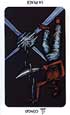
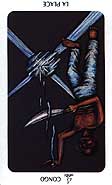 | The card on the bottom represents thought - the analytical process of organizing the project and capturing the emotional content of the previous card. This is the science or vision of the undertaking. Congo La Place (Knight of Cups), when reversed: The dark essence of water behaving as fire, such as a flash flood: Deceptive charm in the service of intense insecurity and rapidly shifting moods. Selfishness, indolence, and a complete lack of maturity. Misguided idealism divorced from practicality. Destructive romantic passions and infidelity. |
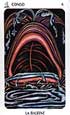
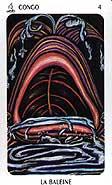 | The card on the right represents manifestation - the real work involved in completing the project, and the form it will take upon culmination. This is the painting or touch of the undertaking. La Baleine (Four of Cups): Being surrounded by love and devotion but taking it for granted. Ignoring the real and longing for the indefinable. Apathy and disengagement from the world. Dissatisfaction with the condition and direction of affairs, but the inability to accept new opportunities. |
|
|