Today's Tarot for Winston Churchill
| The Fourfold Vision spread offers a progression of different ways of looking at an object, person, or situation. It is a powerful tool for gaining deeper insight into the specific subjects of other readings. The Benedetti Tarot is a highly stylized deck painted on gold leaf. 7 years in the making, the images were inspired by the Visconti Tarot, the earliest Tarot deck still in existence. The Benedetti Tarot is the favorite deck of those who seek simplicity and elegance in their lives. |
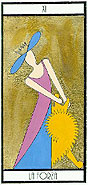 | The card on the far right represents the object being viewed, be it an idea, relationship, or the self. Strength: Raw power. Health and physical fortitude. A surge of tremendous force. Recovery from sickness. Victory after apprehension and fear. The ability to face and overcome opposition brings the inner qualities of strength and forbearance. Delays and setbacks will be overcome. |
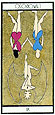
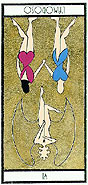 | The card second from the right represents the physical vision: how the object is seen at a base or mechanical level. The Lovers, when reversed: Inner strife, frustration, suspicion, and disagreements in a relationship. Irresponsibility and indecision. Avoiding true intimacy in favor of lust. Unfaithfulness. |
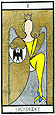
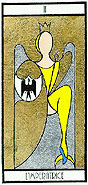 | The card in the middle represents the mental vision: the object personified and seen through a humanized perspective. The Empress: The essence of femininity and matriarchy. Creativity, productivity, and the foundation of civilization. Initiative and practical actions that promote prosperity, comfort and luxury. Fruitfulness and motherhood. |
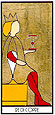
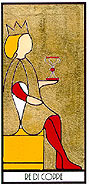 | The card second from the left represents the emotional vision: how passions and values are creatively stimulated by the mental vision. King of Cups: The essence of water behaving as air, such as a billowing cloud in the blue sky: Great maturity, endless patience, tolerance of other points of view, and a deep knowledge of human nature. One who intuitively knows the strengths of those around him, and gently cultivates them. Remaining calm and relaxed in all situations, and making artful use of diplomacy or a quiet word to resolve conflicts. The ability to listen to what another person is saying, and truly understand what is in their heart. A rewarding partner and a beloved leader. |
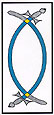
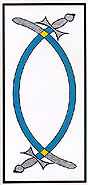 | The card on the far left represents the fourfold or mystical vision: still viewing through the previous three, we now add a spiritual element, revealing unseen aspects of the object. Two of Swords (Peace), when reversed: Indecision due to contradictory characteristics brought together. Tension in the aftermath of a quarrel that has been resolved. Scheming, abuse of trust, and agreements made in bad faith. Allowing the mind to block off the emotions. Self deception as a means of justifying cruel acts. |
|
|