Today's Tarot for Yasser Arafat
| The Two Paths spread provides insight into an important decision ahead of you, the possible outcomes, and the forces that draw you towards each of these outcomes. The Golden Tarot is a modern celebration of late medieval artwork. This deck is the choice of scholars, for it evokes images of elegance amid barbarism, and the light of virtue in dark times. If you would like your own copy of the Golden Tarot, you can buy it now! |
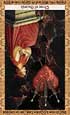
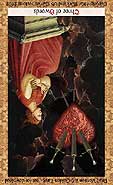 | The top left card represents the first possible outcome. Three of Swords (Sorrow), when reversed: Unsettling news that helps you to distance yourself from a destructive relationship. Painfully honest communication that needs to take place. Not letting yourself be dragged by your emotions into a negative situation. A trust or confidence betrayed in an attempt to help someone in need. The revelation of a painful truth. |
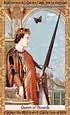
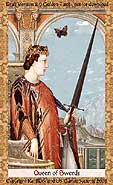 | The top right card represents the second possible outcome. Queen of Swords: The essence of air behaving as water, such as a refreshing mist: A person gifted with both keen logic and natural intuition, giving them uncanny powers of perception and insight. One who easily sees past deception and confusion to the heart of a matter, and understands both sides of any argument. The embodiment of calm, forthrightness, and wit, in the face of even the most trying circumstances. |
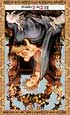
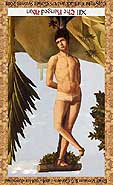 | The middle left card represents the force drawing you towards the first possible outcome. The Hanged Man, when reversed: Life in suspension. Selfish, materialistic, and untrusting attitudes. Unwillingness to make necessary sacrifices. Going along with the crowd, and refusing to hear the inner voice. Concessions and appeasements that backfire. |
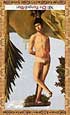
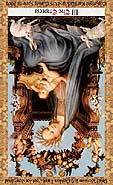 | The middle right card represents the force drawing you towards the second possible outcome. The Empress, when reversed: Stifling matriarchal influence. Unhappiness, selfishness, poverty and disruption of the home or family. Indecision, paranoia, and jealous rage. Sterility. |
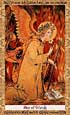
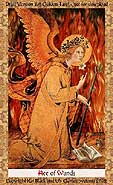 | The bottom card represents the critical factor that decides what will come to pass. Ace of Wands: The seed of a new venture - perhaps as yet unseen. An opportunity to be met with boldness, vigor, and enthusiasm. The herald of birth, invention, or entrepreneurship. An innate and primal force released. May suggest a surge of vitality, creativity, or fertility that can set things in motion. |
|
|