Today's Tarot for Alyssa Milano
| The Three Fates spread is an exceptionally popular way to gain insight into the emerging arc of the past, present, and future. The Aquatic Tarot is a modern watercolor interpretation of the classic Rider Waite symbolism. It is rapidly becoming one of the most popular decks, due to both its spectacular beauty and its traditional imagery. |
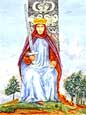
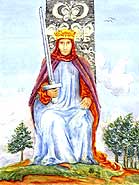 | The left card represents an important element of the past. King of Swords: The essence of air, such as a clear blue sky: A mature leader of unwavering ethics and indisputable authority. An incorruptible judge, whose devotion to the law cannot be swayed by emotion or material concerns. Perfect clarity of thought, directness of action, and eloquence of speech. One who, like a great general, inspires not love or devotion, but absolute trust and loyalty. |
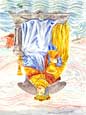
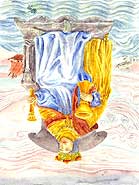 | The middle card represents a deciding element of the present. King of Cups, when reversed: The dark essence of water behaving as air, such as rain clouds in a gray sky: A pillar of maturity and patience, hiding a deep insecurity and an indecisive nature. One who secretly lusts for power, but lacks the courage, intellect, or work ethic necessary to take it. A charming seducer who appears innocent and understanding, but is in fact selfish and unfaithful. |
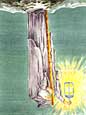
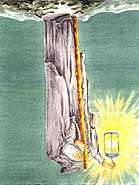 | The right card represents a critical element of the future. The Hermit, when reversed: Detachment based on fear, irresponsibility or naiveté. Self-imposed isolation from friends and loved ones. Listening to the wrong advice or ignoring good counsel. Concealment, disguise, and unreasoned caution. |
|
|