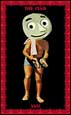
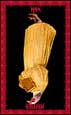
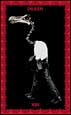
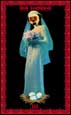
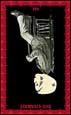
| The Two Paths spread provides insight into an important decision ahead of you, the possible outcomes, and the forces that draw you towards each of these outcomes. The Curious Tarot is the rarest and most unusual of modern decks. The cards form a surreal collage of American consumer imagery, eerily capturing the archetypes of the atomic age. It is the deck of those who seek to harness the ancient tribal energy that courses through the modern urban world. There are only 100 Curious Tarot decks in existence - if you want one, buy it now!
|
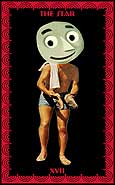 | The top left card represents the first possible outcome. The Star: New hopes and splendid revelations of the future. Insight, inspiration, courage and enlightenment of the spiritual self. Body and mind and converging towards the light at the end of a dark time. |
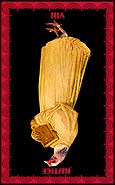 | The top right card represents the second possible outcome. Justice, when reversed: Lack of balance, harmony and integrity. The suspension of action until a decision is made. Lawsuits and prosecutions. Unjust decisions and the consequences of those decisions. A turn for the worse in legal matters. |
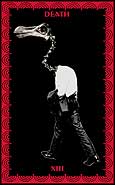 | The middle left card represents the force drawing you towards the first possible outcome. Death: A major change or transformation, possibly traumatic and unexpected. Freedom from the shackles of the past. A new beginning. Death coupled with rebirth, usually related to consciousness and lifestyle. |
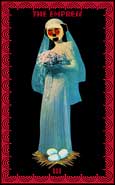 | The middle right card represents the force drawing you towards the second possible outcome. The Empress: The essence of femininity and matriarchy. Creativity, productivity, and the foundation of civilization. Initiative and practical actions that promote prosperity, comfort and luxury. Fruitfulness and motherhood. |
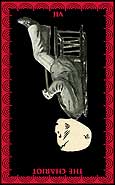 | The bottom card represents the critical factor that decides what will come to pass. The Chariot, when reversed: Ineffective use of force. Might turned against the weak or the righteous. Senseless violence and warmongering. Lack of discipline and poor direction fan the flames of a situation already out of control. Advance without consideration of the consequences for others. |