| The Celtic Cross spread is one of the most popular Tarot spreads, providing varied insight into many aspects of a complex situation and your role in it. The Aquatic Tarot is a modern watercolor interpretation of the classic Rider Waite symbolism. It is rapidly becoming one of the most popular decks, due to both its spectacular beauty and its traditional imagery. |
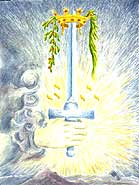 | The card not shown but at the center of the cross, represents the atmosphere surrounding the central issue. Ace of Swords: The seed of victory - perhaps as yet unseen. A challenge to be met and solved through the invocation of force. An opportunity to bring reason and intelligence to bear in the pursuit of justice and truth. An excessive power that must not be abused. May suggest new ideas or information that can reveal a solution to the problem at hand. |
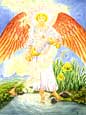
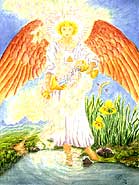 | The card visible at the center of the cross represents the obstacle that stands in your way - it may even be something that sounds good but is not actually to your benefit. Temperance: Calm and restraint. Self-control, patience and tact in handling situations. The act of applying balanced spiritual and psychic forces to physical life. |
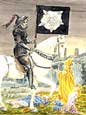
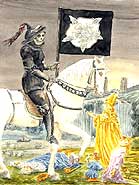 | The card at the top of the cross represents your goal, or the best you can achieve without a dramatic change of priorities. Death: A major change or transformation, possibly traumatic and unexpected. Freedom from the shackles of the past. A new beginning. Death coupled with rebirth, usually related to consciousness and lifestyle. |
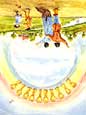
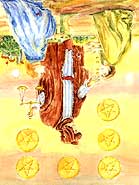 | The card at the bottom of the cross represents the foundation on which the situation is based. Six of Pentacles (Success), when reversed: Insolence and conceit with material things. Overconfidence, bad investments, and imprudent handing of acquired wealth. Contempt for those less fortunate. Deception and petty disputes driven by greed and envy. |
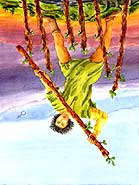 | The card at the left of the cross represents a passing influence or something to be released. Seven of Wands (Valor), when reversed: Failure to stand up for your beliefs in the face of a hostile majority. A self-fulfilling fear of failure or embarrassment. Great challenges met with cowardice. Quarrels, perplexity, and indecision at a crucial moment. |
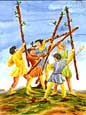
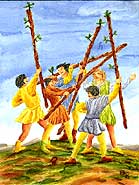 | The card at the right of the cross represents an approaching influence or something to be embraced. Five of Wands (Strife): An intense struggle motivated purely by the love of competition. A state of seeming chaos driven by endless small disputes and complications. A hotly contested race, debate, game, or other challenge. A stressful situation that brings out the best in the participants. |
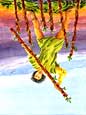
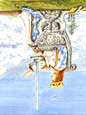
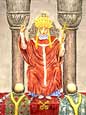
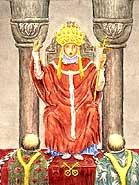 | The card at the base of the staff represents your role or attitude. The Hierophant: Faith in tradition and the old school. A justified and ancient source of power. Being supportive, sympathetic and loyal. Receiving instructions, learning, guidance or inspiration. The ability to hear a higher or inner voice. May also indicate a religious ritual, such as a marriage or an initiation. |
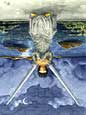
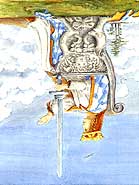 | The card second from the bottom of the staff represents your environment and the people you are interacting with. Queen of Swords, when reversed: The dark essence of air behaving as water, such as a cold rain: A person gifted with both keen logic and natural intuition, giving them uncanny powers of perception and insight. One who easily sees the weakness in any argument, and savages friend and foe alike with biting sarcasm. Dry and vicious wit covering a hollow sense of isolation and dissatisfaction with life. |
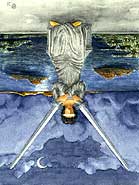 | The card second from the top of the staff represents your hopes, fears, or an unexpected element that will come into play. Two of Swords (Peace), when reversed: Indecision due to contradictory characteristics brought together. Tension in the aftermath of a quarrel that has been resolved. Scheming, abuse of trust, and agreements made in bad faith. Allowing the mind to block off the emotions. Self deception as a means of justifying cruel acts. |
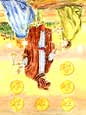
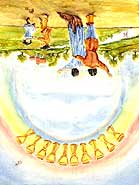 | The card at the top of the staff represents the ultimate outcome should you continue on this course. Ten of Cups (Satiety), when reversed: Dissipation, debauchery, and stagnation. Taking one's good fortune for granted. Problems in domestic and social matters. A false love or infatuation, leading to a lack of fulfillment. |