| The Celtic Cross spread is one of the most popular Tarot spreads, providing varied insight into many aspects of a complex situation and your role in it. The Voodoo Tarot of New Orleans is a deck rich in primal spirituality. It draws on images from the religion Santeria, which weaves Catholic and African beliefs into a vibrant tapestry. This exceptional deck is most often used to ask questions regarding the joy, fury, and spirituality in everyday life. If you would like your own copy of the Voodoo Tarot of New Orleans, you can buy it now! |
 | The card not shown but at the center of the cross, represents the atmosphere surrounding the central issue. Couche (The Hermit): Withdrawal from events and relationship to introspect and gather strength. Seeking the inner voice or calling upon vision from within. A need of understanding and advice, or a wise man who will offer knowing guidance. Personal experience and thoughtful temperance. |
 | The card visible at the center of the cross represents the obstacle that stands in your way - it may even be something that sounds good but is not actually to your benefit. Damballah La Flambeau (Ace of Wands), when reversed: The seed of a new crisis - perhaps as yet unseen. The start of an explosive situation threatening to consume all who get too close. The herald of birth, invention, or upheaval. An innate and primal force unleashed. May suggest a surge of vitality, creativity, or fertility that can set dangerous events in motion. |
 | The card at the top of the cross represents your goal, or the best you can achieve without a dramatic change of priorities. Petro Houngan (King of Wands): The essence of fire behaving as air, such as lightning: A great and daring leader who inspires others to rise to challenges alongside him. An artist who can take hold of an idea and make it a reality through bold action. One who is forceful, charismatic, and honest, leading by example, but unafraid to invest authority in others. A dashing and magnetic personality, carrying authority naturally, and striking at the world with swiftness and grace. |
 | The card at the bottom of the cross represents the foundation on which the situation is based. Gros Bon Ange (The Sun): A time of contentment and freedom from restraints. Creative inspiration. Achievement, success, and warmth. Light and love in personal or business matters. Happiness and faithfulness in a relationship. |
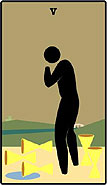
 | The card at the left of the cross represents a passing influence or something to be released. Ogoun Ferraille (Five of Swords): A success earned through personal degradation. Separation from friends brought about by an unfeeling and coldly calculated act. Temporary victory tainted by dishonor and providing fuel for eventual defeat. |
 | The card at the right of the cross represents an approaching influence or something to be embraced. Shango (Eight of Discs), when reversed: Undue attention to small details at the expense of the big picture. Losing yourself in your work, to the detriment of your personal and spiritual life. Making the same mistake repeatedly. Refusing to learn new crafts or skills. |
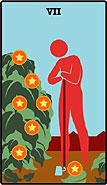
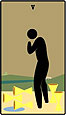
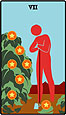
 | The card at the base of the staff represents your role or attitude. Oshun (Seven of Discs), when reversed: Labors abandoned before completion. Impatience, lack of effort, and the wasting of time. Idle and unprofitable speculation. |
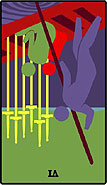
 | The card second from the bottom of the staff represents your environment and the people you are interacting with. Erzulie La Flambeau (Seven of Wands), when reversed: Failure to stand up for your beliefs in the face of a hostile majority. A self-fulfilling fear of failure or embarrassment. Great challenges met with cowardice. Quarrels, perplexity, and indecision at a crucial moment. |
 | The card second from the top of the staff represents your hopes, fears, or an unexpected element that will come into play. Rada Mambo (Queen of Swords), when reversed: The dark essence of air behaving as water, such as a cold rain: A person gifted with both keen logic and natural intuition, giving them uncanny powers of perception and insight. One who easily sees the weakness in any argument, and savages friend and foe alike with biting sarcasm. Dry and vicious wit covering a hollow sense of isolation and dissatisfaction with life. |
 | The card at the top of the staff represents the ultimate outcome should you continue on this course. Master of the Head (The Heirophant): Faith in tradition and the old school. A justified and ancient source of power. Being supportive, sympathetic and loyal. Receiving instructions, learning, guidance or inspiration. The ability to hear a higher or inner voice. May also indicate a religious ritual, such as a marriage or an initiation. |