Today's Tarot for Will Wright
| The Hagall spread is a tool for revealing the path of spiritual growth in difficult situations. It is a favorite of mystics and those confronting a major life challenge. The International Icon Tarot renders traditional occult symbolism in Swiss iconography. It is a humorous and direct approach to divination, and one of our favorite new decks. If you would like your own copy of the International Icon Tarot, you can buy it now!
|
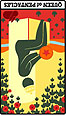
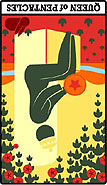 | The card in the middle of the circle represents the core or central issue of the situation. Queen of Pentacles, when reversed: The dark essence of earth behaving as water, such as ice: A cold but generous host, driven by an overwhelming need for to accumulate and maintain opulence. A person so preoccupied with wealth and security that they can never stop to enjoy either. One who reflects the weaknesses of others, breeding suspicion and mistrust. |
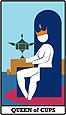
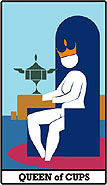 | The card at the bottom of the circle represents something you did to bring the situation about. Queen of Cups: The essence of water, such as a deep and placid lake: Spirituality, maturity, and grace. A natural counselor and healer, One whose relaxed presence seems to embody deep love and spirituality. A tranquil poet who reflects the nature of the observer. The embrace of all things dreamlike and receptive, such as perfect and unconditional love. |
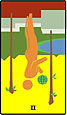
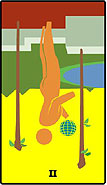 | The card at the bottom left of the circle represents your beliefs, impressions, or expectations. Two of Wands (Dominion), when reversed: The erosion of power and influence. Failing to articulate goals or establish a vision for the future. Being caught off guard, due to an inability to come to grips with the impact of past decisions. Obstinate and irresponsible leadership. Loss of interest, clarity, or faith in a venture. |
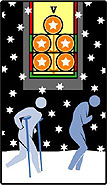 | The card at the bottom right of the circle represents the most likely outcome of the situation given present circumstances. Five of Pentacles (Worry): Hard times brought on by addiction, wasteful spending, ill health, or an outside event. Rejection, loneliness, and the need for comfort. May suggest unemployment, a catastrophe in personal finance, or a turn for the worse in business. |
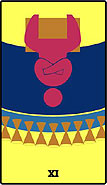 | The card at the upper left of the circle represents the spiritual history of the situation the things you've learned. Nine of Cups (Happiness), when reversed: Vanity, conceit, and smugness in romance, friendship, or other relationships. Achieving what you always thought you wanted. Overindulging in food, drink, or the pleasures of the flesh. A state of joy and abundance that is shallow and fleeting. |
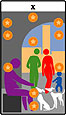
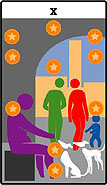 | The card at the top of the circle represents the spiritual tasks and challenges of the present situation. Ten of Pentacles (Wealth): Completion of material prosperity and riches. Freedom from financial anxiety, the security of home, and the enjoyment of family. The passing of inheritance along to children, or the gaining of inheritance from parents. |
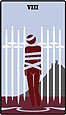
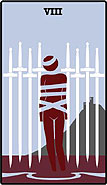 | The card at the upper right of the circle represents the metamorphosis of the spiritual situation, and how your knowledge will evolve. Eight of Swords (Interference): Chagrin at the unforeseen consequences of prior decisions. Criticism, censure, and the imposition of external restrictions. Confusion leading to powerlessness. Inability to focus on the crux of a problem and free oneself from a difficult situation. Being hamstrung by a past failure or humiliation. |
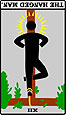
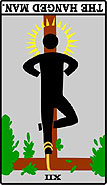 | The card at the left of the lower line represents the person or qualities that will sustain your spiritual journey. The Hanged Man, when reversed: Life in suspension. Selfish, materialistic, and untrusting attitudes. Unwillingness to make necessary sacrifices. Going along with the crowd, and refusing to hear the inner voice. Concessions and appeasements that backfire. |
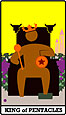
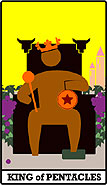 | The card in the middle of the lower line represents the qualities that you express in this circumstance. King of Pentacles: The essence of earth behaving as air, such as a diamond: A true businessman, with a gift for identifying opportunities and taking advantage of them. A person well informed about the world, skilled in all things physical, and eager to encourage others. A pillar of practicality and dependability, embracing tried and tested methods, and possessing an innate understanding of the material reality. A philanthropist and devotee of both luxury and hard work, whose word is as good as gold. |
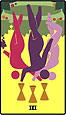
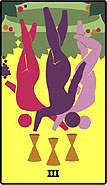 | The card at the right of the lower line represents the person or qualities that will reveal spiritual knowledge. Three of Cups (Abundance), when reversed: A time of shallow overindulgence, followed depletion. The successful but utterly unfulfilling conclusion of a matter. Satisfaction from sensual pleasures divorced from any sense of love. May indicate problems prematurely dismissed or a victory claimed before it is certain. |
|
|