| The Hagall spread is a tool for revealing the path of spiritual growth in difficult situations. It is a favorite of mystics and those confronting a major life challenge. The Palladini Tarot was created to "bridge the ancient and the future", using elements of Medieval, Egyptian and modern art. It is one of the most popular decks among new students of Tarot. If you would like your own copy of the Palladini Tarot, you can buy it now! |
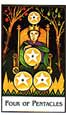
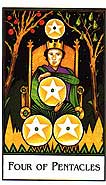 | The card in the middle of the circle represents the core or central issue of the situation. Four of Pentacles (Power): Cleaving to earthly power in the desperate fear that it will be lost. Making yourself an obstacle to progress due to lack of originality and a desperate fear of change. Believing that security and identity are based primarily on the possession of material things. Coveting things and people. Living in a cloud of suspicion and prejudice. |
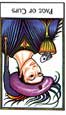
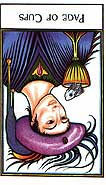 | The card at the bottom of the circle represents something you did to bring the situation about. Page of Cups, when reversed: The dark essence of water behaving as earth, such as a wellspring: An unexpected new relationship that is childish and foolish. An idle dreamer oblivious to the realities of the world. Moodiness, sad reflection, and retreat from society. Seduction and deception in personal and business relationships. |
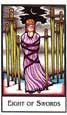
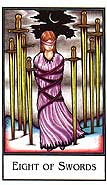 | The card at the bottom left of the circle represents your beliefs, impressions, or expectations. Eight of Swords (Interference): Chagrin at the unforeseen consequences of prior decisions. Criticism, censure, and the imposition of external restrictions. Confusion leading to powerlessness. Inability to focus on the crux of a problem and free oneself from a difficult situation. Being hamstrung by a past failure or humiliation. |
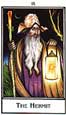
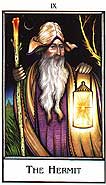 | The card at the bottom right of the circle represents the most likely outcome of the situation given present circumstances. The Hermit: Withdrawal from events and relationship to introspect and gather strength. Seeking the inner voice or calling upon vision from within. A need of understanding and advice, or a wise man who will offer knowing guidance. Personal experience and thoughtful temperance. |
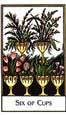
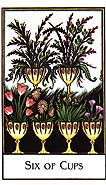 | The card at the upper left of the circle represents the spiritual history of the situation the things you've learned. Six of Cups (Pleasure): Opening your heart to the simple pleasures of life. Fond memories fuel the playful embrace of love and life. Experiencing the joy of youth and sexual innocence. Engaging in acts of gentle kindness. Harmony of natural forces without effort or strain. Meeting an old friend. |
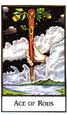
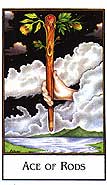 | The card at the top of the circle represents the spiritual tasks and challenges of the present situation. Ace of Rods: The seed of a new venture - perhaps as yet unseen. An opportunity to be met with boldness, vigor, and enthusiasm. The herald of birth, invention, or entrepreneurship. An innate and primal force released. May suggest a surge of vitality, creativity, or fertility that can set things in motion. |
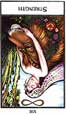
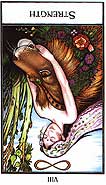 | The card at the upper right of the circle represents the metamorphosis of the spiritual situation, and how your knowledge will evolve. Strength, when reversed: Weakness in the face of obstacles and adversity. Tremendous power released at the wrong moment. Inability to defend oneself. Confusion, and lack of preparedness. Illness, hardship, distress and the failing of physical force. Dominant behavior, abusiveness and a possible loss of reputation. |
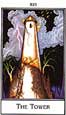
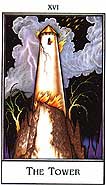 | The card at the left of the lower line represents the person or qualities that will sustain your spiritual journey. The Tower: Unforeseen catastrophe. An abrupt change, perhaps leading to a new lifestyle and enlightenment. May indicate a broken relationship, divorce, or failure in business or career. |
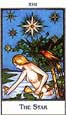
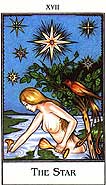 | The card in the middle of the lower line represents the qualities that you express in this circumstance. The Star: New hopes and splendid revelations of the future. Insight, inspiration, courage and enlightenment of the spiritual self. Body and mind and converging towards the light at the end of a dark time. |
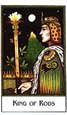
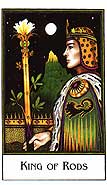 | The card at the right of the lower line represents the person or qualities that will reveal spiritual knowledge. King of Rods: The essence of fire behaving as air, such as lightning: A great and daring leader who inspires others to rise to challenges alongside him. An artist who can take hold of an idea and make it a reality through bold action. One who is forceful, charismatic, and honest, leading by example, but unafraid to invest authority in others. A dashing and magnetic personality, carrying authority naturally, and striking at the world with swiftness and grace. |