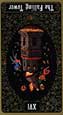
| The Shadow Truth spread provides insight into your attitudes and hidden feelings. This spread is used when you are having trouble confronting something, or fear that you are concealing something from yourself. The Russian Tarot of Saint Petersburg is the final commissioned work of Yuri Shakov, a master in the lost art of Russian miniature painting. The rich, dark images lend themselves to questions regarding the struggle of the human spirit in trying times. If you would like your own copy of the Russian Tarot of Saint Petersburg, you can buy it now! |
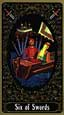
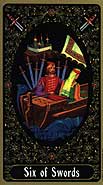 | The card in the center represents the attitude you assume. Six of Swords (Science): A trip or journey. Headstrong attempts to overcome difficulties. Expedient manner. Success after anxiety. |
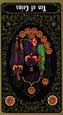
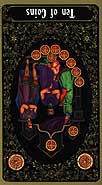 | The card to the right represents the thoughts and feelings that underly your attitudes. Ten of Coins (Wealth), when reversed: Bad odds. Possible loss. Hazard. Robbery. Loss of inheritance. Dissipation. Gambling. |
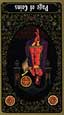
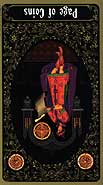 | The card at the top represents how your attitude is evolving and will evolve in the future. Page of Coins, when reversed: An unrealistic person. Failure to recognize obvious facts. Dissipation of ideas. Illogical thinking. Rebelliousness. Wastefulness. Unfavorable news. |
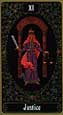
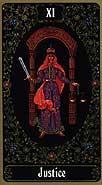 | The card to the left represents how others perceive your attitude. Justice: Reasonableness. Justice Proper balance. Harmony. Equity. Righteousness. Virtue. Honor. Virginity. Just reward. The eventual outcome, whether favorable or unfavorable, will be truly fair to the person concerned. Equilibrium. Poise. Impartiality. |
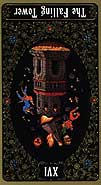 | The card at the bottom represents what you cannot confront or are hiding from yourself. The Falling Tower, when reversed: Continued oppression. Following old way. Living in a rut. Inability to effect any worthwhile change. Entrapment in an unhappy situation. |